


 Free Newsletter
 FREE PRODUCT INFORMATION
Spot Rates Fall for Third Week, But Iran Risks Cloud Outlook
Spencer Musick// Senior Editor//July 31, 2026
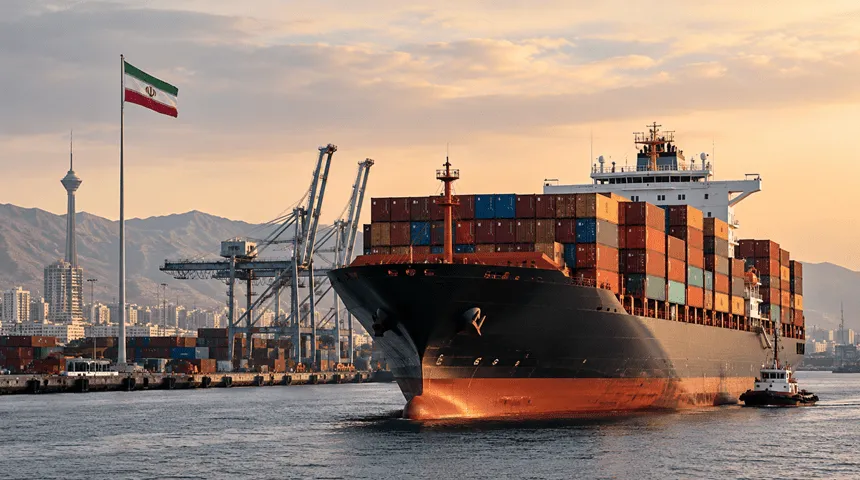
(Image of Iran Container generated by ChatGPT, 2026)
Spot Rates Fall for Third Week, But Iran Risks Cloud Outlook
Drewry’s World Container Index declined 3 percent as demand softened, while Iran claimed it struck two tankers.
Spencer Musick// Senior Editor//July 31, 2026


Global container rates declined for a third consecutive week last week, but escalating attacks around the Strait of Hormuz added new uncertainty for ocean carriers and importers.
The World Container Index from supply chain analytics firm Drewry fell 3 percent to $4,255 per 40-foot container for the week ending July 30. Drewry attributed the decline to lower rates on trans-Pacific and Asia-Europe trade lanes as demand continued to soften.
Spot Rates Tick Downward Despite Risks
Spot rates from Shanghai to Los Angeles decreased 2 percent to $5,739 per 40-foot container, while Shanghai-to-New York rates held steady at $7,578.
With front-loading activity slowing, carriers are continuing to manage capacity through blank sailings. Drewry said eight trans-Pacific sailings are scheduled to be canceled next week, up from seven this week, reducing available capacity. The firm expects rate volatility to ease in the coming week.
Asia-Europe trade lanes recorded larger decreases.
Rates from Shanghai to Genoa fell 6 percent to $5,630 per 40-foot container, while Shanghai-to-Rotterdam rates declined 3 percent to $4,677.
Drewry said carriers are using blank sailings to limit further rate erosion as demand eases. Three Asia-Europe sailings are scheduled to be canceled next week, compared with four this week. Drewry expects rates on the trade lane to remain stable over the next week.
The broader east-west container market remained under pressure following the implementation of new U.S. tariff measures. At the same time, geopolitical tensions in the Middle East have prompted several carriers to introduce emergency fuel surcharges beginning in August.
Iran Claims Tanker Strikes
Those risks intensified Friday when Iran’s Revolutionary Guard said it struck two oil tankers attempting to pass through the Strait of Hormuz under a U.S. military aerial escort.
The Guard described the vessels as noncompliant and said four additional tankers turned back. CBS News reported there was no immediate independent confirmation of the strikes. U.S. Central Command said Thursday that it had redirected 24 commercial vessels since resuming a blockade of Iranian ports earlier in July.
Iran also said it launched drone attacks against U.S. military facilities at Ahmad al-Jaber Air Base in Kuwait. Kuwait’s Defense Ministry said it intercepted hostile drones and reported material damage from falling debris but no casualties.
The Strait of Hormuz, which normally carries about 20 percent of global oil shipments, has been effectively closed by Iran since the war began Feb. 28, despite periodic episodes of calm allowing some traffic through. The United States has repeatedly struck Iran’s southern coastal provinces, saying it seeks to reduce Tehran’s control over the waterway.


